
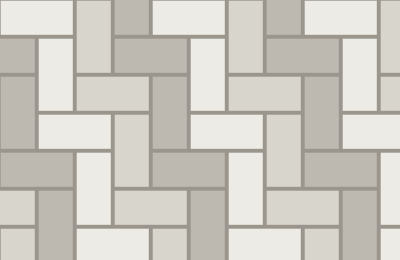
Herringbone
Bricks set at 90° to each other. The strongest bond against turning and braking traffic, because no joint line runs in the direction of travel.
Home / Patterns & colours
The same block laid two different ways gives two different floors. Pick the bond first, then the shade — and tell us both when you order, because the bond decides how many cut blocks and border pieces you will need.
Five bonds we supply for regularly. Each one changes the cutting at the edges, so the quantity works out slightly differently for the same area.
Bricks set at 90° to each other. The strongest bond against turning and braking traffic, because no joint line runs in the direction of travel.
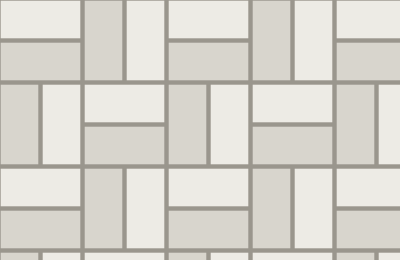
Pairs of blocks alternating horizontal and vertical. Quiet, traditional, and the easiest to set out squarely on a small area.
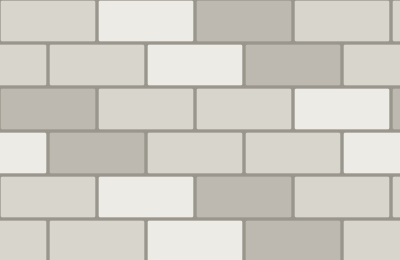
Blocks in straight courses, each offset by half. The least cutting and the fastest to lay over a large flat area.
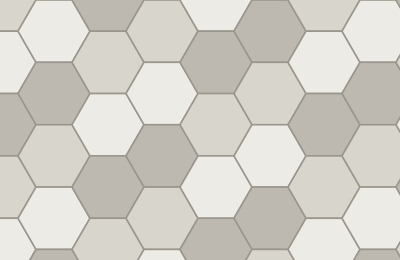
Hexagon blocks in two or three shades. Reads as a pattern from a distance, which is the whole point of using it.
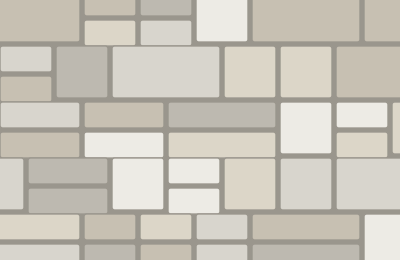
Two or three block sizes mixed so no joint runs straight for long. Looks settled rather than newly laid.
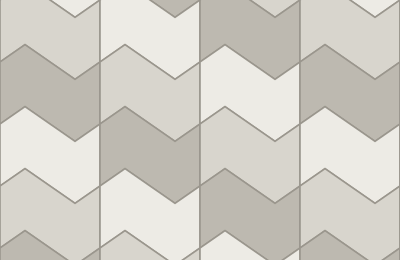
The shaped block does the locking, so the bond is simply straight courses. Our most-ordered combination.
Cement colours are cast into the block, not painted on top, so they wear down with the surface instead of off it. Shades below are indicative — ask for a sample block before ordering, as cement colour varies slightly between batches of raw material.
Most jobs use two shades — a field colour and a border. A red or black border two courses wide around a grey field is the combination we cast most often, and it hides edge cuts better than a single shade does.
For hexagon and cobble work, three shades mixed randomly through the field looks better than any regular arrangement, and it forgives small colour differences between batches.
A rough figure you can check against any quotation, including ours.
Length × width of the surface to be paved. Break odd shapes into rectangles and add them up.
Add 5% for straight bonds, 8–10% for herringbone or honeycomb, where more blocks are cut at the edges.
60 mm for foot traffic and cars, 80 mm for society roads and light trucks, 100 mm where loaded vehicles stand or turn.
Kerb stones or a concrete edge along every open side. Measure the running feet of open edge separately.